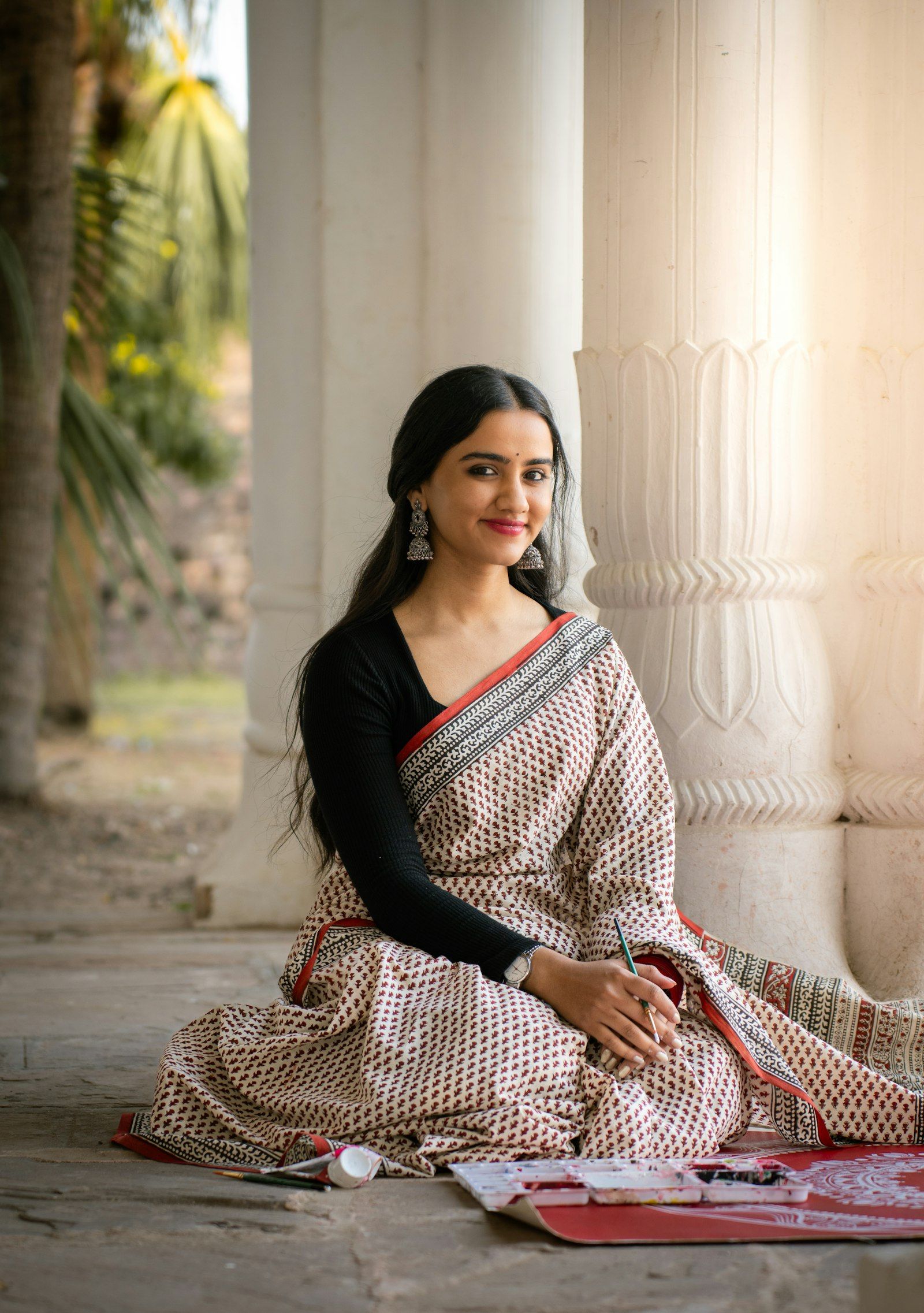
India has half a dozen great summer textiles — Bengali muslins, Mangalagiri cottons, Venkatagiri jamdani — but Chanderi may be the most versatile of them all. Here's why it earns its place at every Indian summer wedding, festival, and office floor.
The breathable blend
Most Chanderis sold today are silk-cotton: a cotton weft against a single-ply silk warp. The cotton lets the saree breathe; the silk gives it a faint sheen and the structure to hold a drape. Even pure-silk Chanderis feel notably lighter than Banarasi or Kanjivaram silks of the same area, because the silk used is unscoured (still has its natural sericin coating).
The drape
A six-yard Chanderi weighs around 350–500 grams. A Banarasi of similar dimensions can hit 1.2 kg. The difference shows up at hour three of a wedding.
What to wear it for
Day weddings, festival mornings, summer office days, daily wear in 35°C+ weather. Avoid only if the venue is cold and air-conditioned for hours — the breathability that makes it perfect outdoors makes it slightly under-warm indoors.
What to spend
Genuine handwoven Chanderis start around ₹4,000 (cotton body, simple butis) and reach ₹40,000+ for fine pure-silk versions with rich zari pallus. Below ₹2,500, you're almost certainly looking at a power-loom imitation.