It's the question behind almost every saree purchase that matters: is this really handloom, or a powerloom piece priced like one? The two can look identical in a photo. In the hand, they rarely are. This guide explains the difference and gives you a set of checks you can run yourself.
If you're new to the term "handloom" at all, start with What Is a Handloom Saree? and come back.
The core difference
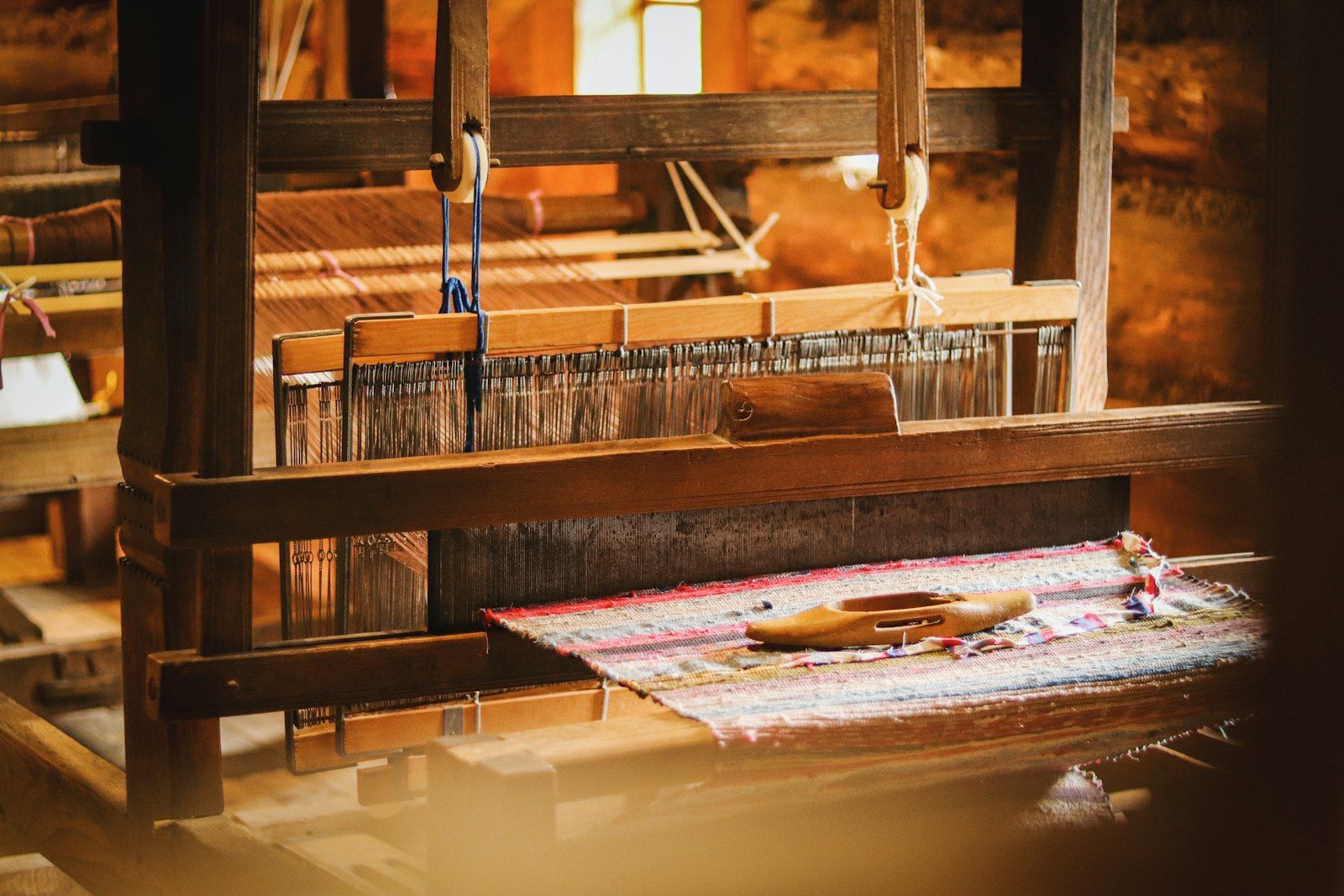
A handloom is worked entirely by a person — the weaver throws the shuttle, works the pedals, and beats each row into place by hand. A powerloom runs the same basic weaving on a motor: the shuttle is thrown mechanically and the cloth is woven many times faster, with far more uniformity. That single difference — human hands versus a motor — explains everything below.
Handloom vs powerloom, side by side
- Who makes it: Handloom — a weaver, pick by pick. Powerloom — a machine, supervised.
- Surface: Handloom — slightly irregular, with tiny slubs and human variation. Powerloom — flawless and uniform.
- The reverse: Handloom — working threads, floats, loose ends visible. Powerloom — flat, often identical to the front.
- Weight and body: Handloom — usually more body; falls in a soft, living drape. Powerloom — often (not always) thinner, and either slick or stiff.
- Time per saree: Handloom — days to months. Powerloom — hours.
- Price: Handloom — higher, reflecting skilled labour. Powerloom — much lower.
- Each piece: Handloom — subtly one-of-a-kind. Powerloom — identical by the dozen.
How to tell them apart in your hands
You don't need a loupe. Six checks get you most of the way:
- Turn it over. The reverse is the great giveaway. Handwoven sarees show the working of the weave on the back — surplus zari floats, knotted ends where motifs finish. A back as clean and identical as the front points to a machine.
- Hunt for irregularity. Run your eye along a border or a row of motifs. Minuscule variation is the fingerprint of a hand; perfect repetition is the fingerprint of a motor.
- Hold it to the light. Handwoven cloth often shows a gentle unevenness in density. Many powerlooms are relentlessly even.
- Weigh it in your hand. Pure-silk handlooms have a reassuring heft; many powerloom imitations feel light and slick because of synthetic blends.
- Crush and release. Natural-fibre handloom tends to recover from a crumple without sharp creases; polyester-blend imitations crease and stay creased.
- Distrust the price. A saree that looks richly woven but costs a fraction of what that work should cost is almost certainly powerloom.
For weave-specific versions of these tests, see how to spot an authentic Chanderi and how to identify a genuine Banarasi.
Is powerloom "bad"?
No — and it's worth saying plainly. Powerloom cloth is affordable, widely available, and perfectly honest when it's sold as powerloom. Not everyone can or should spend handloom money on everyday wear, and the powerloom industry employs enormous numbers of people too. The problem isn't powerloom. The problem is powerloom sold as handloom, at handloom prices. That's not a fabric issue; it's a fraud issue.
The counterfeit problem — and how to protect yourself
Because the price gap is so wide, passing powerloom off as handloom is a lucrative deception, and the most copied names — Banarasi, Kanjivaram, Paithani — are exactly the ones to be careful with. Three safeguards help:
- The Handloom Mark and the India Handloom Brand — two distinct government schemes. The Handloom Mark (launched 2006, run by the Textiles Committee under the Ministry of Textiles) certifies that a product is genuinely handloom — it vouches for origin and authenticity, not quality. The India Handloom Brand (launched on the first National Handloom Day, 2015) goes further, certifying high-quality handloom with zero defects and minimal environmental harm.
- A GI tag, where the weave has one — it certifies origin, though, importantly, not by itself that a piece is handwoven. See Understanding GI Tags.
- A seller who'll let you do the six checks — and tells you frankly when something is powerloom.
Which should you buy?
- Buy handloom for occasions, heirlooms, gifts, and whenever supporting weavers and owning something hand-made matters to you. Expect to pay for the hours inside it.
- Buy powerloom for everyday or budget wear where you want the look without the cost — as long as it's honestly labelled and honestly priced.
The one thing to never do is pay handloom prices for powerloom cloth. The checks above are how you make sure you don't.
Frequently asked questions
Is powerloom silk real silk?
It can be — "powerloom" refers to how it's woven, not what it's made of. A powerloom saree can use real silk or a synthetic. So "powerloom" and "fake silk" are two separate questions; check the fibre and the weave independently.
Why are handloom sarees so much more expensive?
You're paying for skilled human labour — often days to months of it — plus the cost of keeping a slow, traditional craft economically alive. The cloth is the smaller part of the cost; the hands are the larger part.
How can I be sure I'm getting handloom?
Run the six checks above, buy from sellers who welcome them, look for the government handloom mark and a GI tag where applicable, and treat an implausibly low price as a red flag.
Does a GI tag mean it's handloom?
Not on its own. A GI tag certifies where something is from and that it meets the registered specification — which may or may not require handweaving. Read Understanding GI Tags for the full picture.