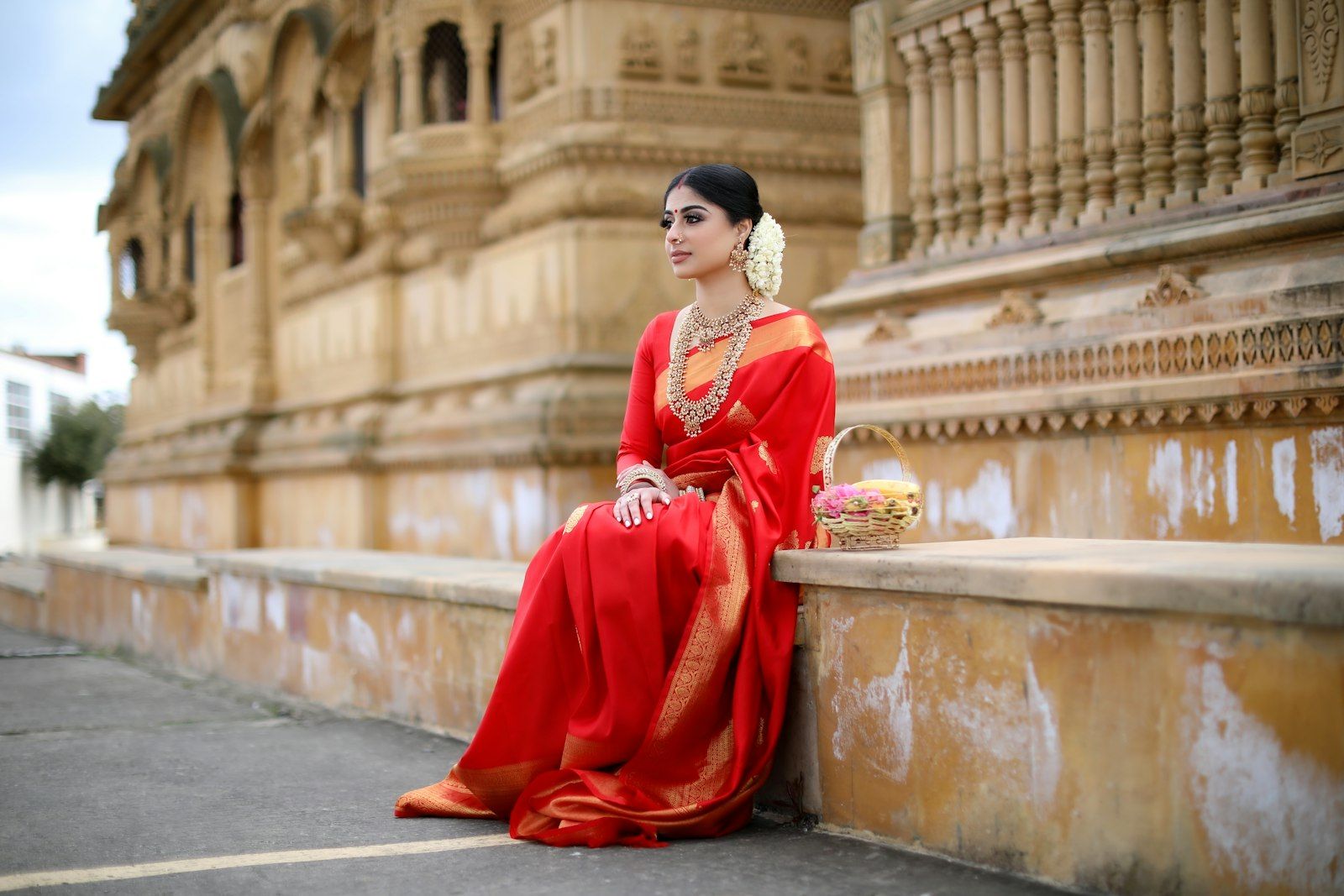
Indian handloom is, above everything, regional. A weave is inseparable from its place — the fibre that grew nearby, the water that set its dyes, the technique a community spent generations perfecting. This is a tour of that map: where the great handlooms come from, organised by zone. Use it as a starting point, then follow the links into each weave and region to go deeper.
How India's weaving map works
Three forces shaped where each tradition took root: fibre (cotton on the plains, silk where sericulture thrived, wool in the mountains, wild silks in the forests of the east), technique (tie-dye, ikat, brocade, extra-weft figuring — each perfected in particular clusters), and patronage (temples, courts, and trade routes that funded and spread a craft). Hold those in mind and the map below stops looking like a list and starts looking like a logic.
North
- Uttar Pradesh — Varanasi is the home of the Banarasi, India's great silk brocade, woven with gold and silver zari. Lucknow gives us Chikankari, the delicate white-on-white hand embroidery.
- Punjab — the bright floral darning of Phulkari.
- Jammu & Kashmir — Pashmina, the famously fine mountain-goat wool, hand-spun and handwoven into shawls.
- Himachal Pradesh — the geometric-bordered Kullu Shawl.
- Rajasthan — Kota Doria, the feather-light cotton-silk with its signature square check.
East
- West Bengal — a trio: Jamdani, the discontinuous-weft figured muslin; Baluchari, silk with narrative pallus; and everyday Tant cotton, woven across the Phulia–Shantipur belt of Nadia district.
- Bihar — Bhagalpuri Tussar, the golden wild silk that gives Bhagalpur its "Silk City" name.
- Odisha — Sambalpuri, the state's celebrated bandha (ikat) tradition.
- Assam — Muga Silk, the rare golden silk unique to Assam, with Sualkuchi as its great weaving town.
West
- Gujarat — three distinct crafts: the legendary double-ikat Patola, historically of Patan and today woven by only a handful of families; the tie-dye Bandhani; and the satin-finish Mashru.
- Maharashtra — the Paithani, with its peacock motifs and richly woven pallu; Paithan (its namesake town) and Yeola are the key centres.
Central
- Madhya Pradesh — two silk-cotton siblings from temple towns: the sheer Chanderi and the denser, five-striped-pallu Maheshwari. (We compare them in Chanderi vs Maheshwari.)
South
- Tamil Nadu — the Kanjivaram, heavy temple silk woven around Kanchipuram, with its contrast borders and substantial zari.
- Karnataka — Mysore Silk, known for its smooth, lustrous pure-silk-and-zari finish.
- Andhra Pradesh & Telangana — an ikat-and-cotton heartland: Pochampally ikat, the silk-cotton Gadwal, and the fine-bordered Mangalagiri.
- Kerala — Kasavu, the cream-and-gold cotton that defines Kerala's festival dress, woven in GI-protected clusters such as Balaramapuram and Kuthampully.
Explore further
This tour barely scratches each tradition. Browse every weave in the field guide, each with its own history, technique, and authenticity notes, or explore India's weaving regions on the map and by state. And if you're just getting oriented, start with What Is a Handloom Saree? and Understanding GI Tags.
Frequently asked questions
Which Indian state is most famous for handloom sarees?
There's no single answer — it depends on the fibre and style. Tamil Nadu and Uttar Pradesh are silk powerhouses (Kanjivaram, Banarasi); West Bengal is renowned for fine cotton and muslin; Gujarat for tie-dye and ikat; Madhya Pradesh for light silk-cottons. Each leads in its own tradition.
Why do different regions weave such different sarees?
Because each tradition grew from what was locally available and locally perfected — the fibre that grew nearby, the technique a community mastered, and the courts or temples that supported it. Geography wrote the map.
Where can I see all the weaves by region?
On our Regions section, which maps weaves to their home states, and across the individual weave guides.